
What a route will not carry, whatever it weighs
Weight decides which lines you may pick. Contents decide which rows were ever available. The second question is older than the first and gets asked less.
 Electronics
 Fragrance
 Eyewear
 Jewellery
 Sneakers
Two of the sixteen shelves carry restrictions that show up as route names rather than as warnings: anything with a battery, and anything that counts as a liquid. The route names say so out loud, and they are easy to read past.
The restrictions are in the route names
| Name on the line | What it is telling you | Shelf affected |
|---|---|---|
| EUB (Batteries and Perfume Not Allowed) | Two exclusions in the route's own title. | Electronics, fragrance |
| UPS Duty-Free (No Batteries) | One exclusion, same pattern. | Electronics |
| Cosmetics Air Express (Battery, Liquid) | The opposite: a route that exists because it takes them. | Fragrance, electronics |
| EUB with Built-in Battery | A battery-specific variant, so built-in and loose batteries are not the same question. | Electronics |
Which makes the planning order clear, and it is not the order most people use. Contents first, weight second, price third. Getting that backwards means picking a route by price, then discovering that the perfume in the box was never allowed on it.
The flag you see before any of this
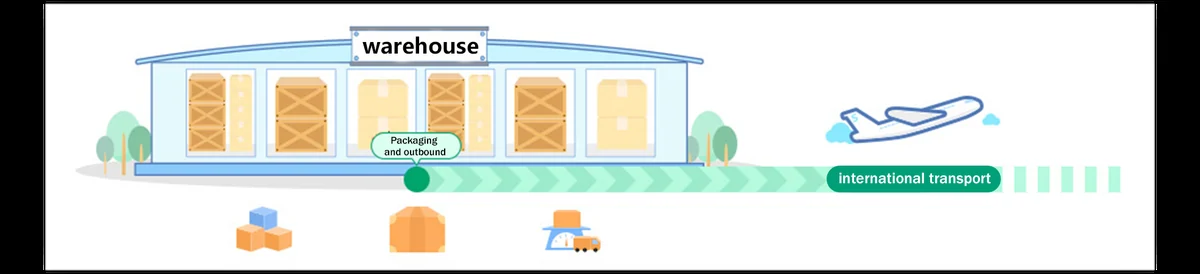
Each warehouse entry carries a mail restriction column of its own, filled in when the item is received. That is the earliest signal you get, and it arrives long before you look at routes.
It is also per item, not per parcel, which is the useful part for a haul: one restricted item does not make the whole box unshippable, it makes that item a separate parcel or a different route.
Items the service will not buy at all
Separately from what a route carries, the anti-counterfeiting policy states that products sold through the platform must be authentic and that selling non-authentic products is strictly prohibited. That is the operator's own wording and it is the boundary this entire site works inside.
So there is nothing here about grading, nothing about which production run is better, and nothing about authenticity checks, because none of those are services that exist.
When the link is not one the search box can read
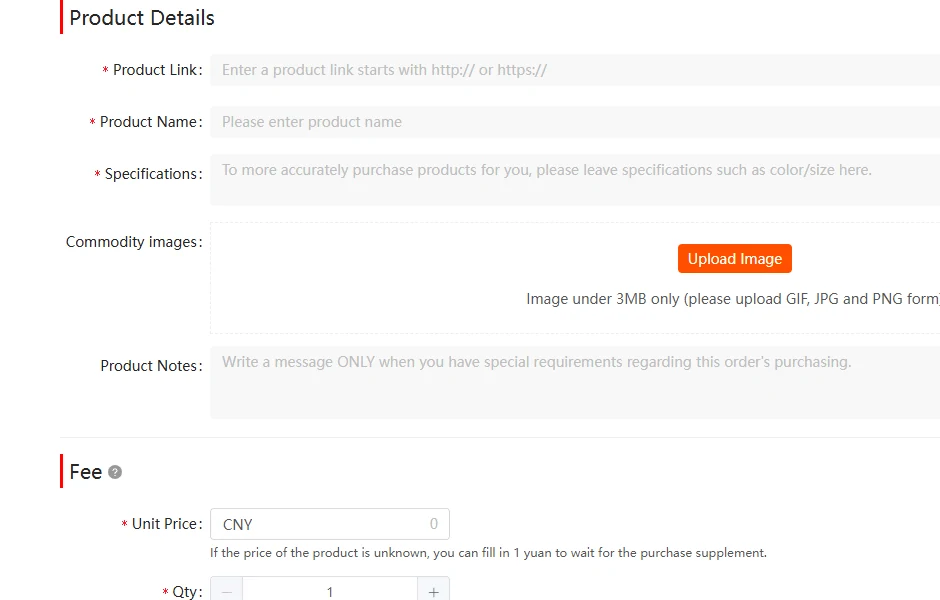
The help centre names four platforms the system reads automatically: Taobao, Tmall, 1688 and JD.COM. Anything else goes through this form, and a person handles it.
For a haul that matters in one specific way. A manual order has a human step in front of it, so it is the one most likely to arrive late and the one most likely to be the seller you end up waiting for.
If a haul contains one manual item and three automatic ones, submit the manual one first. The clock does not care which was harder to order.
The form also asks for a unit price in yuan, with a note that you can put one yuan in and wait for a supplement if the price is unknown. That is a useful tell: the manual route expects a conversation, not an instant answer.